KU School of Engineering History

It's hard to claim that tradition makes a program better, except when the tradition is one of originality, leadership and constant improvement.
The first engineering degree granted in the entire state of Kansas was a degree in civil engineering awarded in 1873 to KU student Murray Harris. Harris was one of four members of the first graduating class at KU.
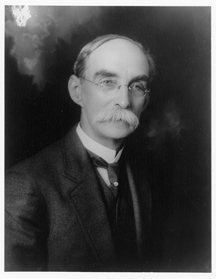 Although KU already had an engineering degree program, the School of Engineering wasn't established until 1891, when the Kansas Board of Regents said "aye" and KU became home to the first school of engineering in Kansas. The first dean of engineering was Frank O. Marvin, a civil engineer, namesake of Marvin Hall and a guy with a great mustache.
Over the years, degree programs in the School of Engineering have changed to fit the needs of society and trends in education. Mechanical engineering students are no longer expected to spend every day in the Roofs and Bridges class as they did more than 100 years ago. Long gone are programs in metallurgical and mining engineering. The school now offers newer degree programs and concentrations in bioengineering, information technology, project management and interdisciplinary computing. All undergraduate engineering degree programs are accredited through the Accreditation Board for Engineering and Technology.
Originally, KU's architecture degree program was administered through the School of Engineering. In 1968, the Board of Regents allowed the university to create the School of Architecture and Urban Design. The close relationship that remains between the schools of Architecture and Engineering is best reflected through the rigorous architectural engineering program offered through the School of Engineering. Today's ARCE students continue to take Architecture studio courses and have the opportunity to pursue both a B.S. in Architectural Engineering and a Master of Architecture degree in six years of study.
In 1995, the university's computer science degree programs were moved from the College of Liberal Arts and Sciences into the School of Engineering. The change reflected the increasingly important link between programming development and hardware. The shift also strengthened the continually growing association between all engineering disciplines and computer science. Newer programs in interdisciplinary computing allow students to harness the power of computers to further discovery in a field of science, such as biology or physics.
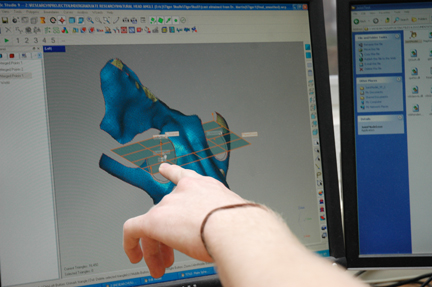 Today, the emphasis in the KU School of Engineering is on interdisciplinary research. Engineers and computer scientists from different disciplines work together to provide innovative solutions to challenges around the world. New research centers headquartered at KU - the NSF Center for Remote Sensing of Ice Sheets, the Center for Environmentally Beneficial Catalysis and the KU Transportation Research Institute - all put the focus on interdisciplinary efforts to find the best solutions. These centers and many other laboratories provide KU engineering and computing students, faculty and staff with outstanding opportunities for personal and professional growth.
The School of Engineering has more than 100 faculty members, many of whom have achieved the honor of Fellow within their professional associations. KU is the only university in the state with faculty in the National Academy of Engineering.
In 1978, the school established an advisory board to help the school ensure its graduates receive an education that makes them competitive in the workforce. The board consists of influential and sagacious people - many of them alumni - in business, industry, government and education. The board provides guidance in planning and organizing the school's activities and in identifying opportunities and developing resources.
KU engineering and computing students come from Kansas and beyond. In fact, engineering and computing students represent more than 50 countries. The students say they chose the KU School of Engineering for its excellent reputation, strong programs in their major, close contact with faculty, opportunities for research and student projects, affordability, quality of the facilities and friendly atmosphere. Women make up nearly 22 percent of the undergraduate student body and 24 percent of graduate students.
What's in store for the future? The history is still to be written. What we can say is that it will include some of the best ideas ever imagined.